
Article submission
TheBefore diving in, please ensure the following are defined properly in your journal:
- File types. Many options are available here, such as auto-renaming, extension constraints, visibility etc
- Article categorizations (metadata)
Once the above are defined, the submission workflow is theeasily mostconfigured technical configuration! At the minimum, we recommend to follow the following steps, hang in there:
File type configurationArticle type configurationSubmission instructions configuration
The file type configuration
The first step is the file type configuration, where file types are listed, and may be created, updated, or deleted:
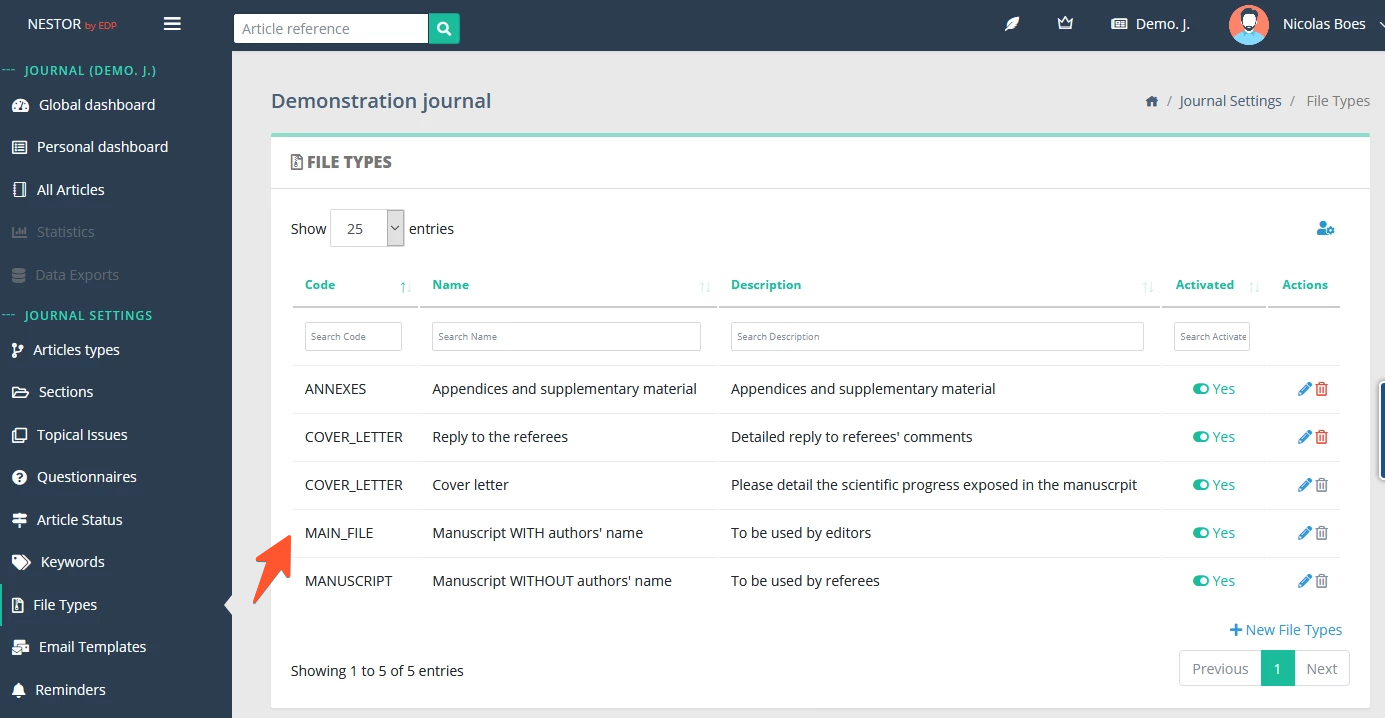
Clicking on “Edit file type” will get you to the file type configuration, where the following fields may be edited:
NameVisibility by users (editors and referees)Whether this file type will be sent to production systems when the article is accepted

The article type configuration
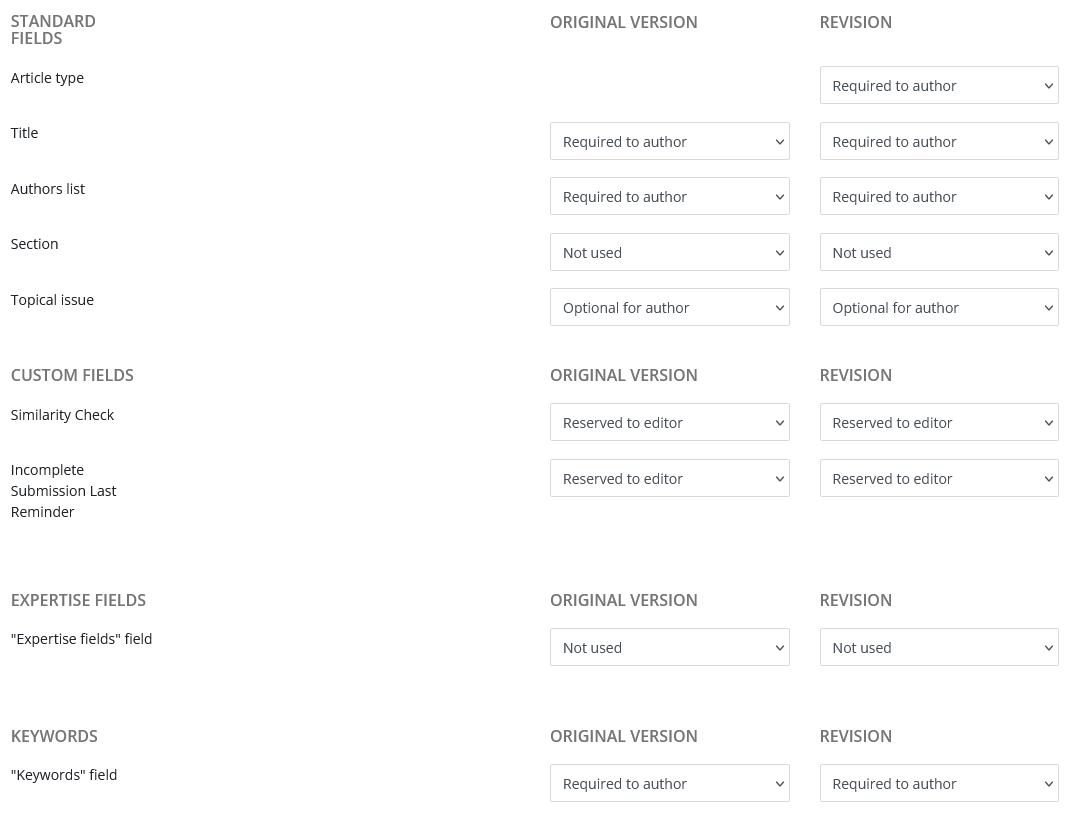
The second step isat the article type configuratioleveln,, where specific file types and metadata may be requested to the author at submission or revision, for a specificeach article type.
Two practical examples:
-
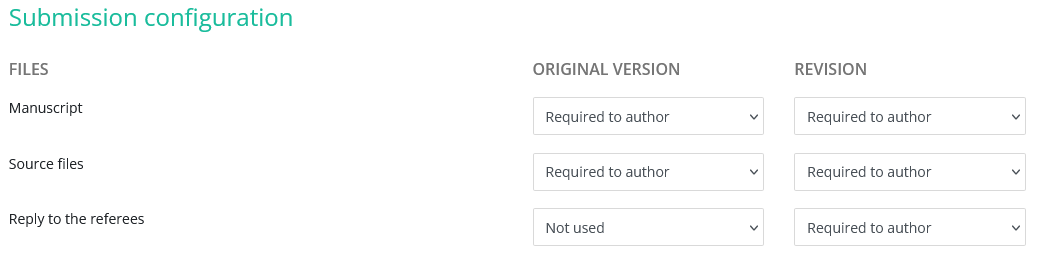
Depending on the article type, you may want to require specific files. For example, a cover letter from the authors may not be requested for a preface article.
-
In a given article type, depending on the first submission or a revised submission, you may want to require specific files. For example, a first submission will never require a reply to the referee, while a revised version will often
needneedsa reply to the referee.one.
Thus,For for any giveneach article type, thisyou behaviormay isdefine:
- Required file types
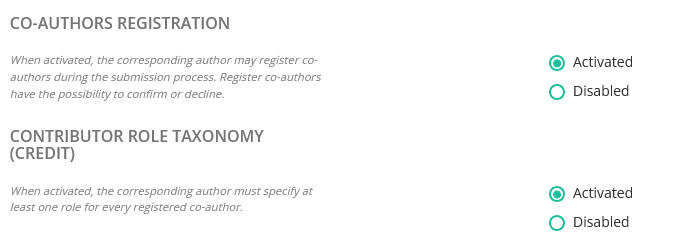
- Required metadata
TheConfiguration of submission instructions configuration
During the submission process, the author may be guided during each step of the submission.
For this purpose, you may configure specific instructions here:
